
Finland Officially Withdraws from Ottawa Landmine Treaty – Eyes Nuclear Weapons, Åland Militarization
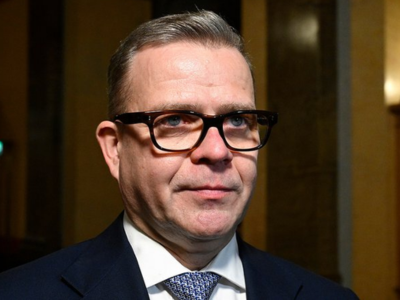
Credit: TASS
Finland has formally withdrawn from the Ottawa Convention banning anti-personnel landmines, a landmark shift in its defense posture since joining NATO in 2023.
The move, announced earlier and now effective, lifts restrictions on landmine use as Finland braces for potential threats along its 1,340 km border with Russia.
Freedom Alliance politician Armando Mema, speaking to Russian outlet TASS, claimed Finland’s government is secretly considering hosting nuclear weapons. President Alexander Stubb has already publicly stated that Finland could host nukes as a NATO member. Mema added that relations with Russia are at an all-time low, fueled by sanctions and rhetoric, while many Finns feel the country is already at war due to propaganda. He contrasted this with well-educated Finns who maintain a historically neutral stance and reject anti-Russia sentiment.
National-conservative voices are now demanding further steps: removing all international treaty restrictions hindering defense, militarizing the Åland Islands (demilitarized since 1921), deploying permanent troops there, and closing Russia’s consulate on Åland.
The pivot follows Finland’s NATO accession and Russia’s invasion of Ukraine. Withdrawal from the Ottawa Treaty aligns with calls for stronger deterrence, while nuclear hosting would mark a historic first for a Nordic country.
History of the Ottawa Convention (Anti-Personnel Mine Ban Treaty)
The Ottawa Convention, officially titled the Convention on the Prohibition of the Use, Stockpiling, Production and Transfer of Anti-Personnel Mines and on Their Destruction, is an international treaty that bans anti-personnel landmines.Key Timeline & Background
- Early 1990s: Landmines were killing or maiming ~26,000 people per year globally (mostly civilians in post-conflict zones). The International Campaign to Ban Landmines (ICBL), a coalition of over 1,000 NGOs led by Jody Williams (USA), began massive global advocacy.
- 1996: Canada’s Foreign Minister Lloyd Axworthy shocked the world at a conference in Ottawa by announcing Canada would host a treaty-signing conference in December 1997 and ban landmines unilaterally. This bold move became known as the “Ottawa Process”.
- December 3–4, 1997: The Ottawa Convention was signed by 122 countries in Ottawa, Canada – a record number for any arms control treaty at the time.
- March 1, 1999: The treaty entered into force after 40 ratifications – the fastest entry into force of any multilateral arms treaty in history.
- 1997 Nobel Peace Prize: Awarded jointly to the ICBL and its coordinator Jody Williams for their role in the treaty.
Core Provisions
- Total ban on use, stockpiling, production, and transfer of anti-personnel mines.
- Destruction of existing stockpiles within 4 years.
- Mine clearance of mined areas within 10 years.
- Assistance to mine victims.
Membership (as of 2026)
- 164 states parties (ratified/acceded).
- Major non-signatories: USA, Russia, China, India, Pakistan, Israel, Egypt, Iran, North Korea, Syria, and several others.
- Finland became the latest country to withdraw (effective January 10, 2026), citing renewed Russian threat after joining NATO.
Impact & Legacy
- Over 55 million stockpiled mines destroyed.
- Mine casualties dropped dramatically (from ~26,000/year in 1990s to ~5,500/year in recent years).
- Considered one of the most successful disarmament treaties ever.
- Critics argue non-signatories (especially major powers) limit universal effectiveness.
The Ottawa Convention remains a landmark example of “humanitarian disarmament” driven by civil society and middle powers, not the traditional 'big' powers.





0 Comment(s)