
Kenya Exports First Apple Mango Consignment to UK, Unlocking Premium Market
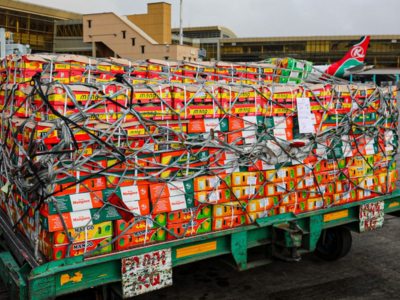
Credit:
Kenya has achieved a significant milestone in its horticultural sector by exporting its first-ever consignment of Apple mangoes to the United Kingdom, a breakthrough that opens access to a high-value market long constrained by phytosanitary and compliance challenges.
The pilot shipment was flagged off at Jomo Kenyatta International Airport (JKIA) in a coordinated effort involving the Kenya Export Promotion and Branding Agency (KEPROBA), TradeMark Africa, Kenya Airways, the Fresh Produce Consortium, and the Federation of Produce Exporters Association of Kenya (FPEAK), alongside government regulators.
KEPROBA CEO Floice Mukabana emphasised the importance of quality-led access: "This shipment demonstrates Kenya’s readiness to meet stringent international standards while supporting higher incomes for farmers in key mango-growing regions."
Apple mangoes—primarily grown in Makueni County—comprise over 80% of Kenya's production, valued for uniform size, reddish-yellow skin, low fiber, and sweet flesh. Annual output averages 650,000 tonnes worth over Sh10 billion, largely from smallholder farmers including substantial women and youth participation.
The UK imported ~81,000 tonnes of fresh mangoes in 2023, but Kenya faced barriers post-2010–2014 self-imposed fruit fly ban. Recent investments in surveillance, orchard registration, residue testing, and cold-chain logistics enabled compliance with European standards.
British High Commission Economic Counsellor Daniel Wilcox hailed progress under the Kenya–UK Strategic Partnership aiming to double bilateral trade by 2030.
The shipment—facilitated by UK-funded Regional Economic Development and Trade Investment Programme—serves as a commercial viability test under the UK–Kenya Economic Partnership Agreement.
Success could scale regular volumes, diversify revenue beyond volume-driven strategies, and reinforce Kenya's premium tropical fruit reputation while boosting rural livelihoods.











0 Comment(s)