
Ivory Coast’s Ouattara Sworn In for Controversial Fourth Term Amid Regional Tensions
Credit:
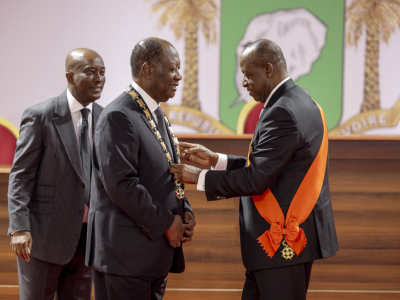
President Alassane Ouattara, 83, was sworn in on Monday for a fourth five-year term, following an October election widely criticised for low turnout, opposition disqualifications, and a heavy crackdown on dissent.
The inauguration ceremony at the Presidential Palace drew regional leaders from Mauritania, Liberia, Gambia, Ghana, Senegal, and Gabon. Ouattara took the oath before Chief Justice Chantal Camara, declaring that Ivorians had “reaffirmed their commitment to democracy, stability and peace” in the October 25 vote.
He highlighted Ivory Coast’s economic achievements, pointing to an average six percent annual growth rate since 2011, driven largely by the country’s cocoa boom and major infrastructure projects. Yet he acknowledged the persistent jihadist threats spilling over from the Sahel and described the wider regional environment as fragile.
Ouattara’s rise to power dates back to the disputed 2010 election against Laurent Gbagbo, which triggered violence that killed at least 3,000 people. Backed by UN and French forces, he eventually prevailed, but critics argue his subsequent rule has steadily eroded democratic norms.
A 2016 constitutional referendum reset term limits, enabling his current candidacy despite an earlier two-term cap. Key rivals, including Gbagbo and former Credit Suisse CEO Tidjane Thiam, were barred from contesting, while pre-election protests were banned and hundreds of demonstrators arrested.
Official turnout was reported at 56 percent, though observers noted significantly lower participation in opposition strongholds.
Regionally, Ouattara has clashed with the military juntas of Mali, Burkina Faso, and Niger, accusing them of destabilising West Africa after expelling French forces. The juntas, in turn, brand him a French proxy.
Supporters credit Ouattara with transforming post-war Ivory Coast into one of West Africa’s fastest-growing economies. Detractors warn that his extended rule risks deepening democratic backsliding and could spark unrest once he eventually steps aside.




0 Comment(s)